


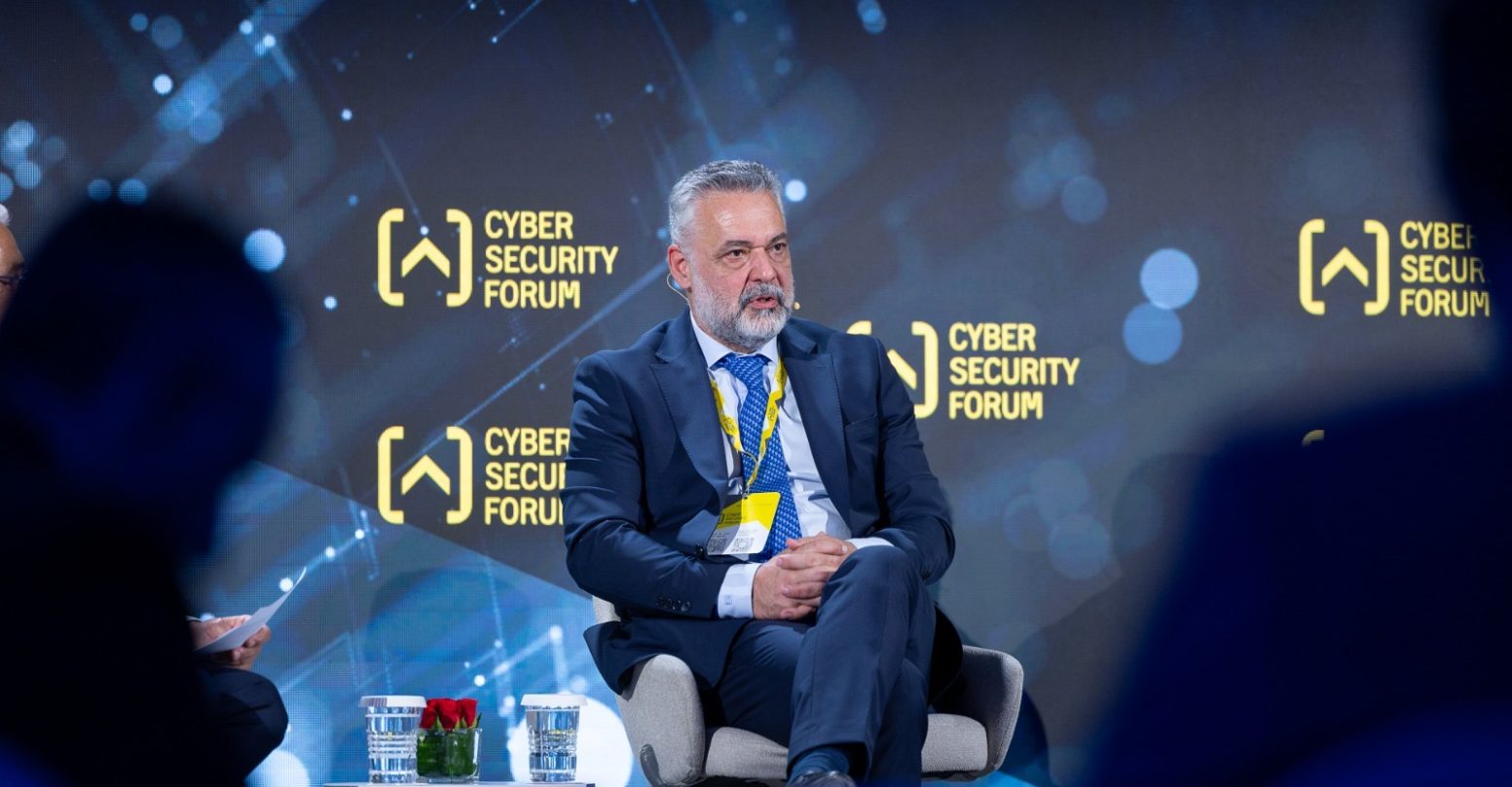
Stavros Asthenidis, Chief Executive Officer to Information Society S.M.S.A., announced at the Cyber Security Forum that the Greek Government is promoting a new tender for the continuation of the Government Cloud. In that regard, Mr Asthenidis highlighted the importance of cyber security, business continuity and data protection for the secure and uninterrupted operation of the State’s digital services.
Mr Asthenidis noted: “A new tender for the Government Cloud is being launched. The infrastructure has been consolidated and all the groundwork has been carried out by the General Secretariat for Information Systems. We need to examine and implement various business continuity scenarios with regard to the infrastructure that has been developed. This must be done comprehensively, both at the level of the central government’s infrastructure and at the level of each individual organization’s infrastructure”.
He placed particular emphasis on the sovereignty of government data, explaining that a hybrid infrastructure model has been developed, which combines public cloud services with the infrastructure of the General Secretariat for Information Systems.
“As the Greek government, we have taken these steps to ensure both that we know where our data is and how we manage it. This is very important”, he said. Mr. Asthenidis noted that the constant evolution of threats and the use of artificial intelligence by cybercriminals require constant vigilance.
“We are at a good level, but that is not enough,” he emphasized, warning that even a single hacker can cause significant damage to older IT systems.
At the same time, he stressed the need to implement business continuity plans, both within the central government’s infrastructure and within each organization individually. He also warned that cyberattacks are not exclusively aimed at extorting ransom, as stolen data can also be exploited for other malicious purposes.
Secure digital infrastructure for a more effective public sector
The need for secure, reliable and resilient digital infrastructure is directly linked to the further development of the public sector’s digital services and the improvement of services for citizens and businesses.
A prime example, as he emphasised, is the Unified Digital Infrastructure for Citizen and Business Services (CRM), a flagship project being implemented by Information Society S.M.S.A., with the aim of unifying service channels, enhancing interoperability between public bodies and shaping a more effective and citizen-centered model of public administration.
The utilization and exchange of information between different systems highlight the importance of secure data management and of ensuring the continuous availability of services as essential prerequisites for building trust between the State and the citizen, an action implemented within the framework of the National Recovery and Resilience Plan “Greece 2.0”, funded by the European Union – NextGenerationEU.
For his part, Tilemachos Moraitis, Government Affairs Director for Greece, Cyprus, Malta, and the Adriatic countries at Microsoft, highlighted the importance of collaboration between the public and private sectors. He referred to Microsoft’s planned data center in Greece and explained that it will offer businesses and public bodies options for hosting and protecting data, depending on their needs.
Mr Moraitis explained that “there are solutions ranging from the public cloud –that is, the cloud which is open to everyone– to services that can even be completely disconnected from the internet”, and added: “The most important thing is not where the data is located. What matters most is the control each individual has over the data.”
He also presented Microsoft’s Government Security Program, through which partner governments receive free daily updates on cyber threats, and which is now being developed to operate at a European level.
Furthermore, he specifically referred to quantum security. “We are currently calling on all our partners, our clients and the entire digital community to take this technology seriously, as it will eventually become part of our lives, and to start preparing for from now on”, he noted.
The discussion was moderated by Stavros Papagiannopoulos, Chief Executive Officer at EXL Consulting.
The Cyber Security Forum 2026 is organized by Tsomokos Communications and is held under the auspices of the Ministry of National Defence, the Ministry of Digital Governance, the National Cybersecurity Authority and the Hellenic Capital Market Commission, with EXL Consulting serving as the Content Partner.


